The Wall Street Journal reports that corporate America’s profits are booming—and that business leaders expect the strength to continue. On the face of it, this should not be happening.
There is a war. Oil prices are high. Businesses and workers are trying to understand whether AI will augment jobs or eliminate them. Consumers complain about prices, confidence is fragile, and the economic conversation often sounds one bad headline away from recession.
Yet corporate America is producing extraordinary profits. Big companies are raising guidance, earnings are surging, and the breadth of the improvement reaches well beyond a handful of technology giants.
This is not necessarily a contradiction. It is a confluence.
Several currents, one surprising result
AI investment is creating a capital-spending boom. The immediate beneficiaries extend beyond chipmakers to data centers, power suppliers, software providers, construction firms, and the businesses surrounding that infrastructure.
Federal spending continues to support demand across the economy. Tariff refunds are providing some companies with a real—but temporary—margin windfall. High stock prices and elevated home values are sustaining spending among asset-owning consumers, even while other households feel squeezed. Meanwhile, years of cost discipline, pricing action, and operating leverage are allowing incremental revenue to fall rapidly to the bottom line.
No single factor fully explains the outcome. Together, they are powerful enough to overwhelm the headwinds—at least for now.
The boom is real. That does not mean every force behind it is permanent.
Do not force a one-variable explanation
We often want the economy to behave like a clean model: oil rises, margins fall; uncertainty rises, spending slows; technology threatens jobs, confidence weakens. Real economies are messier. Several forces can operate in opposite directions at the same time, and their combined effect can produce an outcome that looks impossible when viewed through only one variable.
That is the lesson of today’s corporate-profit boom. The unlikely result is not evidence that the risks are imaginary. It is evidence that, for the moment, an unusual collection of tailwinds is stronger.
The real test is not whether profits are booming today. It is how much of today’s confluence belongs in tomorrow’s forecast.
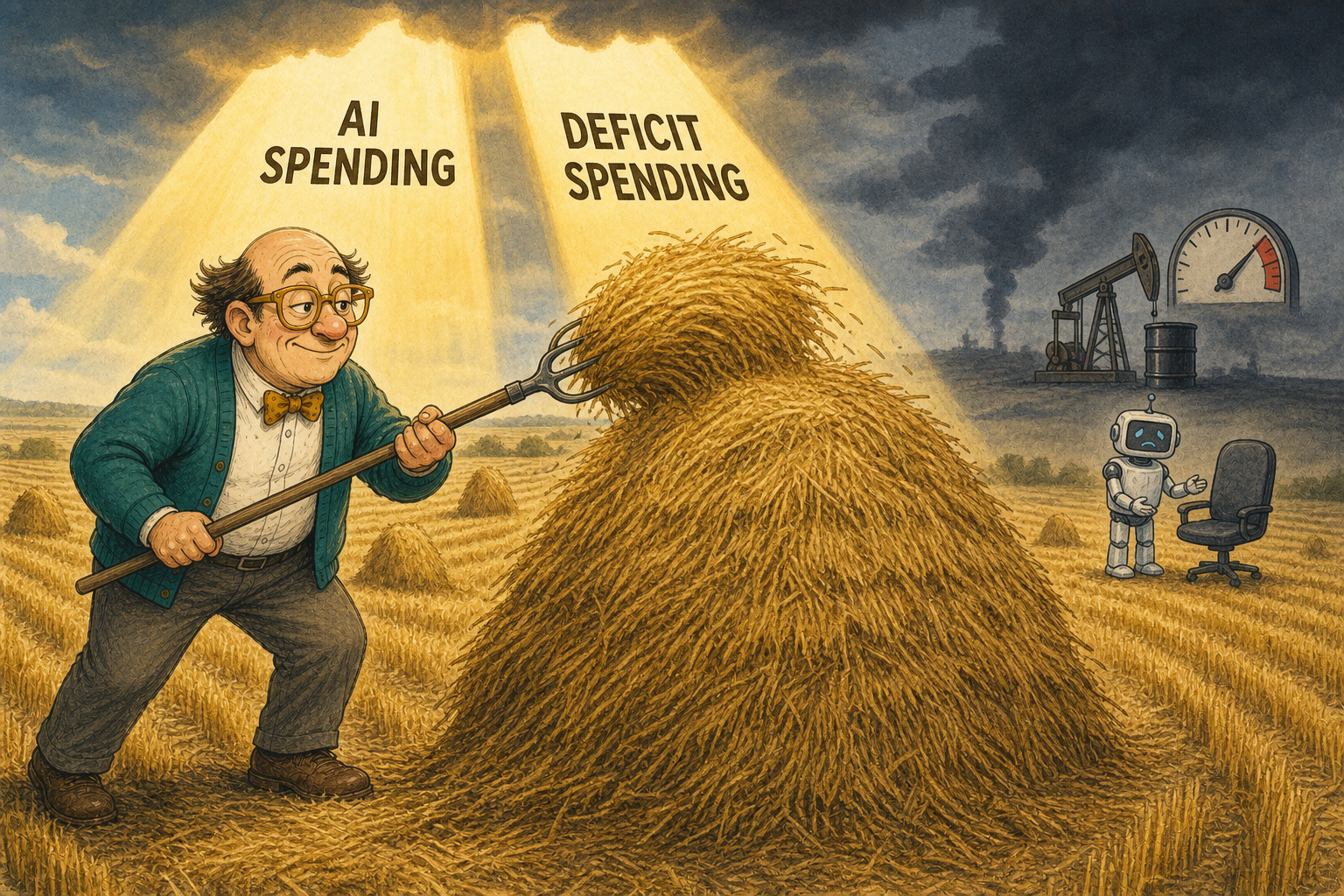
For the near term, the two largest engines—AI capital spending and deficit-financed government demand—should continue to hold up. That makes this profit run more sustainable than the gloomy backdrop might suggest.
Corporate America understands the moment: companies are making hay while the sun is shining.