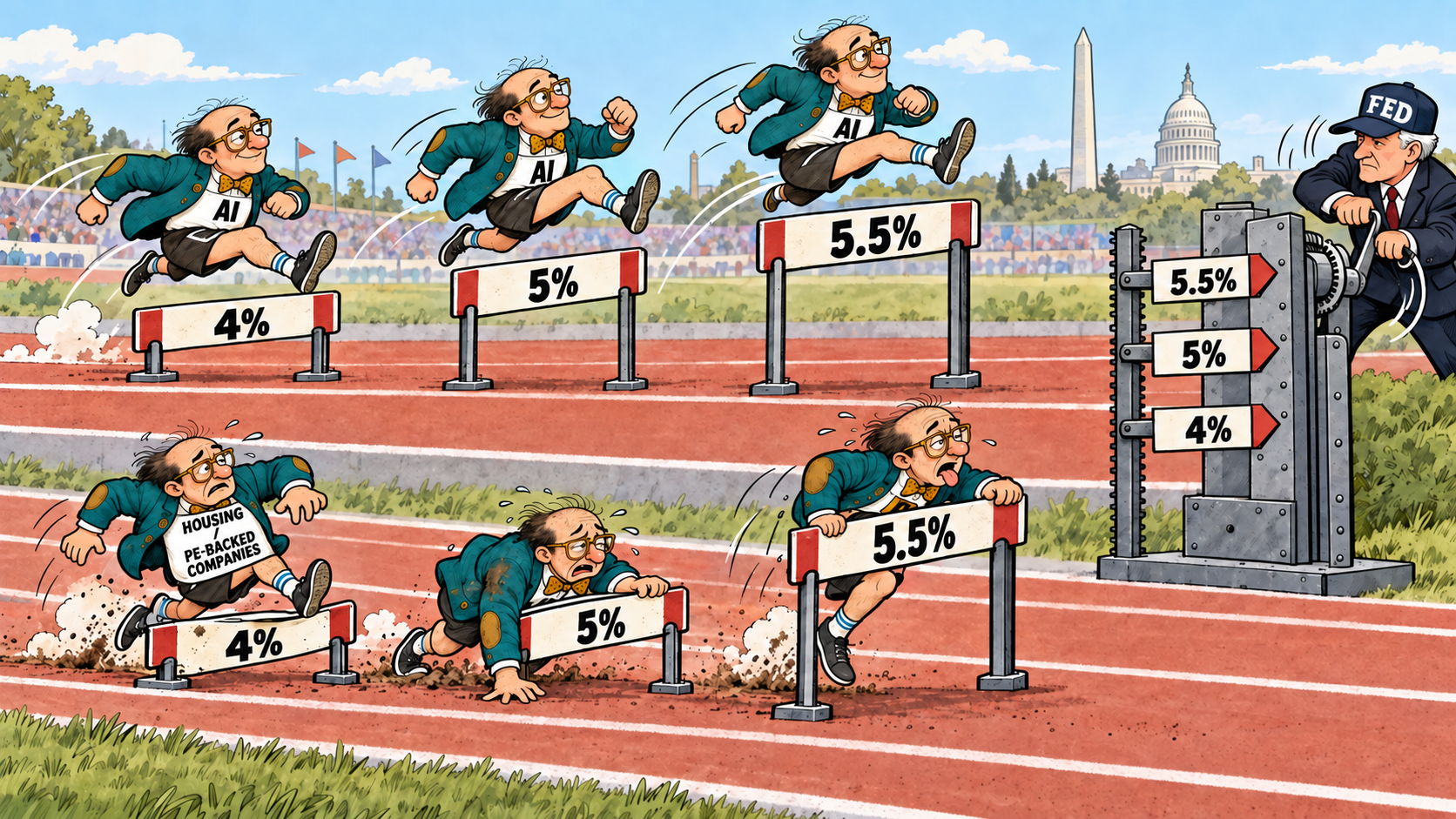
The U.S. economy seems to have missed the memo. Bond yields are rising. Mortgage rates have reached 7%. Inflation, tariffs and energy costs remain concerns. Yet hiring has picked up, businesses are reporting stronger orders, and investment in AI continues at a remarkable pace.
That resilience is impressive. It is also becoming a problem for the Federal Reserve.
Higher interest rates are supposed to make borrowing more expensive, slow spending and investment, and eventually ease inflation. We can see the mechanism working in housing. Home sales are struggling. Consumer-facing companies are facing significant headwinds. Businesses that depend on financing feel every increase in rates.
But the economy as a whole is still buzzing.
The investment that may ignore the brakes
The AI build-out may help explain why. If companies believe the potential returns from AI are enormous, the difference between financing a project at 5% and 6% may barely change their decision. Data centers still need to be built. Equipment still needs to be purchased. Electricity still needs to be secured. The spending then flows through construction, manufacturing and other parts of the economy.
What happens when the Fed’s main tool slows the rate-sensitive economy but barely touches the investment driving growth?
The cost of another dose
The Fed could respond by raising rates further. That would put even more pressure on housing, smaller businesses and consumers carrying debt. Meanwhile, higher borrowing costs would add to expenses for companies that need to finance inventory, facilities and operations. Some of those costs could eventually find their way into prices.
This does not mean rate hikes automatically cause more inflation. Higher rates also reduce demand, and that effect can ultimately dominate. But if AI investment keeps running while other sectors absorb most of the pain, the Fed may have to apply much more pressure to get the same economy-wide slowdown.
Bond investors are increasingly concerned about how high the Fed may need to take rates to keep inflation in check. Rising Treasury yields then make borrowing more expensive even without another Fed move.
We may be watching an economy with two different interest-rate sensitivities: one in which a higher mortgage rate can stop a home purchase, and another in which the prospect of extraordinary AI returns keeps a multibillion-dollar project moving.
The Bite-Sized Take
Standing pat on further rate hikes may sound like controversial medicine. But if the sectors that respond to higher rates are already slowing, while the sectors driving growth barely respond at all, another dose could deepen the pain without doing much to cure the problem.